The Authorisation Ledger: Matching Machines to Operators on a Mixed Farm

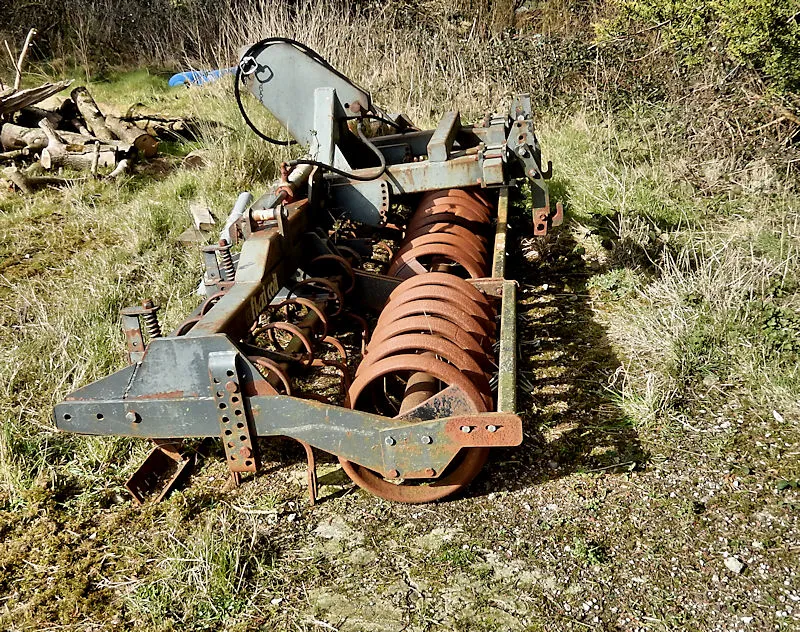
Photo: Paul Anderson, CC BY-SA 2.0, via Wikimedia Commons
Most farms can name the person who usually takes the telehandler. Fewer can produce, when asked, a document that sets out who is permitted to use it, what training sits behind that permission, and when the decision was last reviewed. That gap is worth closing. Under the Provision and Use of Work Equipment Regulations 1998, the duty to ensure equipment is used only by people who have received adequate training and instruction attaches to the machine, not to the job title. A long-serving relief worker is not automatically authorised, and a new starter with a certificate is not automatically competent.
The answer is not a longer staff handbook. It is a single register that links machines to people, and evidence to permissions, in a form that can be read in a yard office in under five minutes.
Begin with the machine list, not the staff list
It is tempting to start with names and work outwards. In practice, the register holds together better when it starts from the assets. Walk the yard and list every self-propelled machine and every power unit that carries genuine risk: tractors by fleet number, telehandlers, the loader on the yard scraper, the ATV, the utility vehicle, the ride-on mowers and the pedestrian machines used by seasonal staff.
For each, record three things before any names are added: the machine class, the tasks it is expected to perform, and the attachments it operates. A tractor is not one permission. Driving a tractor on the road, hauling grain at 40 tonnes gross, and operating a mounted sprayer are three different activities with three different risk profiles. Splitting the permission at task level is what makes the matrix useful rather than decorative.
Three tiers of permission
A workable register uses a small number of levels. More than three or four and the document stops being read.
- Supervised use. The operator may use the machine only with a named competent person present. Suitable for new starters, returning staff and anyone refreshing a skill after a long absence.
- Unsupervised use for named tasks. The operator may use the machine for the specific tasks listed, without supervision. This should be the default status for most experienced staff, and it should name the tasks rather than the machine alone.
- Instruction and supervision of others. The operator may act as the supervising person for the machine and may sign off another individual moving between tiers. This is a separate competence and is often assumed rather than assessed.
A fourth column, marked simply not authorised, is more valuable than it looks. It records a decision rather than an absence.
What evidence sits behind each line
Every entry in the matrix should reference a document that already exists or can be obtained. Certificates are the visible part: LANTRA or NPTC awards for telehandlers and rough-terrain lifting, sit-astride ATV training, mower and strimmer certificates, and the relevant spraying certificates where applicable. Reference checks and induction records carry as much weight for tractor work, where formal certification is less standardised.
Evidence should also include the practical items that certificates cannot show: the date the operator last completed a task on that machine class, who observed them, and whether any near miss or damage record exists. A simple observation note signed by the farm manager is legitimate evidence, and it is often the most current evidence available.
Record the date each piece of evidence was seen, not the date it was issued. A certificate from 2019 held against a machine that arrived in 2025 tells you something useful, but only if the register is honest about the gap.
Attachments change the permission
The most common failure in operator registers is that they authorise a machine and forget the implement. A loader is a benign machine with a bale spike fitted and a very different proposition with a crane jib, a lifting sling or a hydraulic grab. Lifting operations bring the Lifting Operations and Lifting Equipment Regulations 1998 into play, along with the need for thorough examination of lifting accessories.
Treat attachments as separate lines in the register. Where an attachment carries its own certification requirement, the permission to use the base machine should be visibly conditional on it. The same applies to trailers above a certain size, slurry tankers, and any implement that changes the stability or braking characteristics of the tractor.
Contractors, relief staff and family members
A matrix that covers only PAYE staff will fail exactly when it is needed. Relief workers, contractors bringing their own machines onto the yard, and family members who help at harvest all need either a line in the register or a clear statement that they operate under their own arrangements.
For visiting contractors, the practical control is a short site induction record: which machines they will bring, who will operate them, and confirmation that competence and insurance sit with the contractor's business. For family members who use farm machines informally, the register is the moment to formalise what everyone already assumes.
Review triggers, not review dates
An annual review date is a weak control because it arrives at the wrong time. Better to define triggers that force an update: a new machine arriving, an attachment being purchased, a member of staff returning from long-term absence, a change of role, a damage incident, or a change in the working pattern such as moving from arable to contract work.
Keep the register with the machinery records rather than in the personnel file. It is a machine document as much as a people document, and it is read by the person allocating work in the morning, not by the person processing payroll.
Making the document survive contact with the yard
Print it. Laminate the current version for the workshop wall and keep the master copy dated. Where the farm is assured under Red Tractor or a similar scheme, the register answers a competence question that auditors ask regularly, and it answers it with evidence rather than assertion.
Finally, check it against insurance. Most farm policies require that machinery is operated by competent, authorised persons, and a written matrix is the simplest proof that the business took that condition seriously. A register that fits on two sides of A4, is reviewed when something changes, and names real documents is worth more than a filing cabinet of certificates nobody has opened since the last inspection.