Cover That Matches the Yard: A Machinery Insurance Audit for Renewal Season
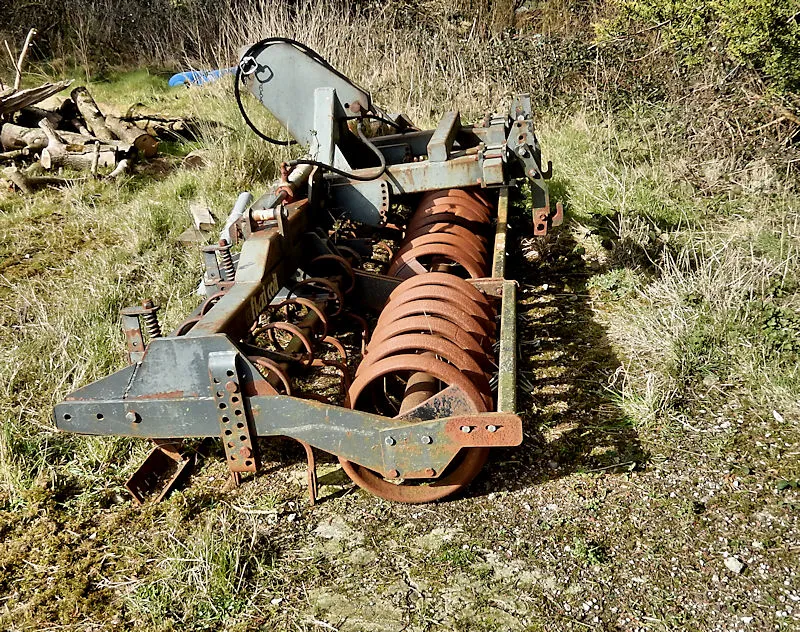
Photo: kevin higgins , CC BY-SA 2.0, via Wikimedia Commons
On many UK farms the machinery insurance schedule lives in a folder that is opened once a year, signed and returned. The renewal date becomes a deadline rather than a decision. Yet the values printed on that schedule may have been set when the main tractor was younger, when the telehandler had fewer hours, and before a loader, a second set of wheels or a folding mower deck joined the fleet. Replacement costs, repair labour and the price of attachments have moved on since then. The result is a quiet gap between what the policy says the fleet is worth and what it would actually cost to put a working fleet back in the yard.
The schedule is a specification, not a formality
An insurance schedule is best read as a specification document. Each line should identify a machine, its age, its serial number and a value that corresponds to a stated basis of settlement. That basis matters. A policy may settle at market value, at a agreed value, or on a new-for-old basis for younger machines. The figure that is appropriate under one basis may be wrong under another. The audit begins by establishing which basis applies to each item, and then checking whether the value on the schedule can be supported by evidence.
This is not an argument for inflating values. Over-insurance carries its own cost and can complicate a claim. The aim is accuracy: a schedule that reflects the machines in the yard, the work they do and the cost of replacing them with something comparable.
The attachment blind spot
Attachments are where schedules most often fall behind. A tractor may be listed at a sensible value while the loader, bucket, bale spike, weight block and front linkage are absent from the schedule or bundled into a single figure that no longer reflects replacement cost. On groundcare fleets, mower decks, collectors, trailers and towed equipment can represent a significant share of the working value of the machine. Electronics add another layer: guidance domes, cameras, sensors and upgraded terminals are not always captured by a general description.
The practical response is a physical walk-round with a clipboard or a tablet. Record each attachment against its parent machine, note serial numbers where they exist, and photograph the identification plates. Where an attachment can be used across more than one machine, decide how it should be scheduled and make that decision explicit. An insurer reading a claim needs to see what was on the machine, not what might have been.
Hours, condition and the honest middle
Hours and condition are not merely servicing data. They are evidence for the value on the schedule. A high-hour machine may have a modest market value, but replacing it with a comparable unit of similar age and condition may still cost more than the schedule suggests. Conversely, a low-hour machine that has been cosseted may be worth more than a generic figure.
The audit should record hours at the renewal date, note any significant repairs or refurbishment, and take a small set of dated photographs showing the machine from several angles. These need not be studio quality. They need to be clear enough to show condition, configuration and any identifying features. If the policy settles on a market value basis, a written note explaining why this particular machine is above or below average is useful supporting material.
Dealer quotes as evidence, not aspiration
A like-for-like dealer quote is one of the most persuasive documents in a renewal file. Ask for a written quotation for the same specification: same model or nearest equivalent, same transmission, same loader or front linkage, same tyres and any essential attachments. For older machines, obtain two figures where possible: one for a comparable used unit and one for a new equivalent. The pair allows a conversation with the broker about basis and value without guessing.
Quotes should include delivery, first service and any mandatory preparation. Repair labour rates are also worth recording, because a claim for damage may be settled at prevailing workshop rates rather than the rates that applied when the policy was written. A quote is not a wish list. It is a dated, attributable statement of what replacement would cost.
The file an assessor will want
After a fire or theft, the insurer or loss adjuster will ask for evidence that most farms have somewhere but not in one place. Purchase invoices, finance agreements, service records, serial numbers, photographs and a list of attachments are the usual core. A simple digital folder, organised by machine, turns a stressful reconstruction into a retrieval exercise.
It is also sensible to keep a copy of the current schedule in the same folder, together with any correspondence about basis of settlement. If a machine is replaced or sold during the year, update the schedule then rather than waiting for renewal. A schedule that is maintained is easier to defend than one that is reconstructed from memory.
A sequence for the pre-renewal month
Six weeks before renewal, compile the fleet list and walk the yard. Photograph each machine and its serial plate. List attachments and note any shared equipment. Request like-for-like quotes from dealers. Review the basis of settlement for each item with the broker. Two weeks before renewal, confirm the values, check that the schedule matches the fleet and store a copy. After renewal, diary a mid-year check for any significant purchase.
The renewal date is a natural audit point because it arrives every year whether the fleet has changed or not. Treating insurance as a specification exercise rather than a paperwork chore closes the gap before it becomes a claim dispute. The objective is not the highest possible sum insured, but a schedule that can be explained, evidenced and defended when the yard is empty and the replacement is urgent.