The Coupler Is a Control Point: Standardising Hydraulic Connections on Mixed UK Farms
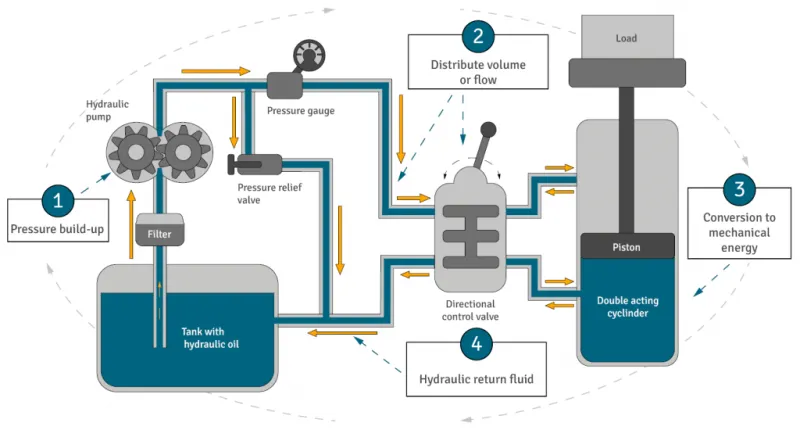
Photo: hydraulic quick release couplings on tractor loader hoses farm workshop close up, via www.jungheinrich-profishop.co.uk
On many UK farms, the hydraulic quick-release coupling is treated as a universal joint: if it fits, it must be right. That assumption holds until a loader will not connect to an implement, a contractor arrives with incompatible hoses, or a fine spray of oil signals that a coupler has been forced or left open. The coupler is a small component, but it is a control point for flow, contamination and safety. Standardising it across a mixed fleet is less about buying new fittings than about applying a simple, documented rule that survives harvest, slurry and winter maintenance.
The hidden cost of a mismatched connection
A mismatched coupler rarely fails politely. At best, it refuses to connect and costs time. At worst, it connects partially, restricts flow, overheats oil or releases pressure unexpectedly. Poppet and flat-face designs are not always interchangeable, and nominal sizes can look similar while behaving differently. A coupler that is forced onto the wrong nipple can damage seals, distort the body or leave a metal particle in the circuit. Trapped pressure adds another risk: a hose that will not couple may be holding pressure, and a sharp knock can turn a routine connection into an oil-injection hazard.
The operational cost is equally real. A machine that cannot be paired with the right implement is a machine out of work. On a mixed farm with tractors, telehandlers, loaders and a changing roster of implements, the coupling is often the weakest link in an otherwise well-planned fleet.
Start with a register, not a colour pot
A colour scheme is useful only after the fleet has been mapped. Begin with a coupling register that lists every tractor, telehandler, loader and implement that shares hydraulic circuits. For each item, record the coupler type, size, circuit function, working pressure and flow requirement. Note which machines and implements are routinely paired, and which pairings are occasional or contractor-led.
The register does not need to be elaborate. A spreadsheet is sufficient, provided it is kept current. The important discipline is to record the evidence: photographs of couplers, part numbers where visible, and notes on any adapter or hose modification. This becomes the reference point for colour coding, tagging and pre-season checks. Without it, a colour system becomes decoration rather than control.
Colour and tag: a system that survives dirt and daylight
Colour should identify circuit function, not brand or machine. A farm may choose one colour for pressure lines, another for return lines and a third for case drain, but the exact palette matters less than consistency. Apply colour bands to the hose and matching caps, and use durable tags that carry the machine identifier and circuit code. Colour is a prompt; the tag is the record.
Relying on colour alone is risky. Dirt, UV fading and colour-vision deficiency can all defeat a purely visual system. Add letters, symbols or numbered tags so that a coupler can be identified without relying on hue. Use metal or heavy-duty polymer tags that will survive pressure washing, oil and mud. Where implements are shared between farms or contractors, agree the tag format in advance so that a borrowed machine does not arrive with an unreadable code.
Oil cleanliness at the coupling face
Every open coupler is a contamination path. Dust caps and plugs are not optional accessories; they are part of the circuit. Implements should be stored with couplers capped, and hoses should be wiped clean before connection. Pressure washing directly at the coupler face should be avoided, as it can drive water and grit past seals.
Oil cleanliness checks belong in the same routine. Take samples at the recommended interval and compare results against the OEM specification, typically expressed using ISO 4406 cleanliness codes. If a circuit shows rising contamination, inspect the coupler, breather and filter path rather than simply changing oil. Replace damaged seals and couplers promptly. A clean connection is cheaper than a failed pump, and a coupler that is left open is an invitation to both.
Briefing operators and contractors
The standard will only hold if it is briefed. Produce a one-page guide showing the colour and tag system, the correct connection procedure and the action to take when a coupler will not fit. Use it in a toolbox talk before the busy season and include it in contractor induction. Explain why the rule exists: not to add bureaucracy, but to prevent downtime, oil loss and injury.
Name a person responsible for the register and for periodic checks. Keep a laminated copy in the cab or workshop. When a contractor connects to a farm machine, the same standard should apply, and any adapter should be recorded rather than left as a temporary fix. The test is whether the system can be followed at the end of a long day, in poor light, without reference to a manual.
A pre-season routine that sticks
Before the main workload, walk the fleet with the register in hand. Check couplers for damage, confirm tags are legible, verify that caps are present and inspect hose condition. Take oil samples where due. Brief the team and confirm that contractor arrangements are understood. After the season, review the register for mismatches, adapters and recurring failures.
A hydraulic coupling standard is not a substitute for good maintenance, but it makes good maintenance visible. By treating the coupler as a control point rather than a consumable, mixed fleets can reduce mismatch risk, protect oil cleanliness and keep machines paired with the work they are meant to do.