Small Farm, Straight Lines: The Real Case for Entry-Level Autosteer in 2026
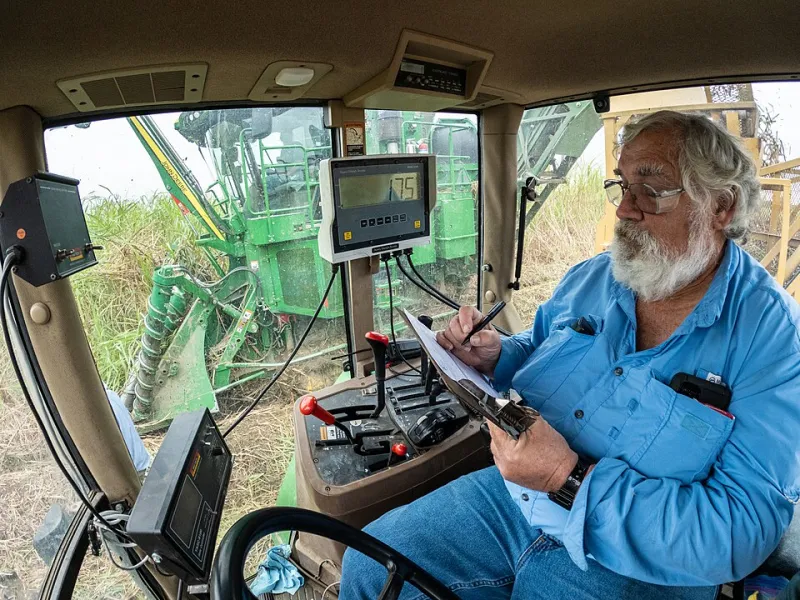
Photo: USDAgov, Public domain, via Wikimedia Commons
Guidance is no longer confined to large arable estates. Entry-level lightbars, retro-fit assisted steering and lower-cost correction services have made some form of GPS available to smaller mixed farms. The question for 2026 is not whether the technology works, but whether it earns its place on a holding with irregular fields, varied enterprises and a modest annual workload.
What entry-level means in 2026
At the simple end, a lightbar shows a guidance line and leaves the steering to the operator. Assisted steering adds a motor or steering-wheel drive that turns the wheel, while hydraulic autosteer integrates with the tractor's steering system. Accuracy depends on the correction signal: basic satellite augmentation may deliver pass-to-pass accuracy measured in tens of centimetres, while RTK services can achieve a few centimetres. Installation, correction subscriptions and unlock fees vary widely. Buyers should price the whole package over five years, not just the hardware.
The lightbar case
A lightbar is often underestimated. It reduces overlap in spraying and spreading, helps maintain bout widths in poor visibility and gives a less experienced operator a clear reference. It does not control the steering, so it will not remove fatigue on long drilling days, but it is portable, simple and comparatively cheap. On small, irregular fields where the operator is constantly turning and adjusting, a lightbar can be the sensible first step. It also suits farms where several people use different tractors and where a single autosteer installation would be difficult to justify.
Where autosteer earns its keep
Autosteer pays back most convincingly when the same pass is repeated over many hectares. Drilling is the classic case: straighter bouts, better tramline discipline, less overlap and less operator fatigue during long autumn days. Spraying benefits from reduced overlap and fewer skips, particularly with wide booms and low water volumes. Mowing is less clear-cut. On grassland and mixed farms, mowing often follows field shape and obstacles rather than long straight runs, so the productivity gain may be modest. The financial case rests on measured savings, not on the novelty of a hands-free tractor.
Hidden costs and practical limits
The headline kit price is rarely the whole cost. Installation on an older tractor can require brackets, wiring, a steering interface and a new display. Correction signals may be subscription-based, and some systems charge for features that buyers assume are included. RTK requires a base station or network service, and coverage must be confirmed before purchase. Calibration, training and dealer support also matter. A cheap retrofit that is difficult to transfer between machines may prove more expensive than a simpler lightbar used across the fleet.
An honest verdict for smaller mixed farms
For a smaller mixed farm, the sensible sequence is usually lightbar first, autosteer second. If the main tasks are spraying, spreading and occasional drilling across modest acreage, a lightbar can capture much of the overlap saving without the installation and subscription burden. If drilling and spraying are central, if one operator spends long hours in the seat, and if the tractor is likely to be kept for several years, entry-level autosteer can be justified. It is money wasted when fields are too small or irregular to use it, when several operators share the machine, or when the tractor is old and electrically unsuited to a retrofit. The right answer is the one that matches the farm's actual work, not the demonstration field.