The Lubrication Ledger: Turning Fleet Greasing into a Documented Routine
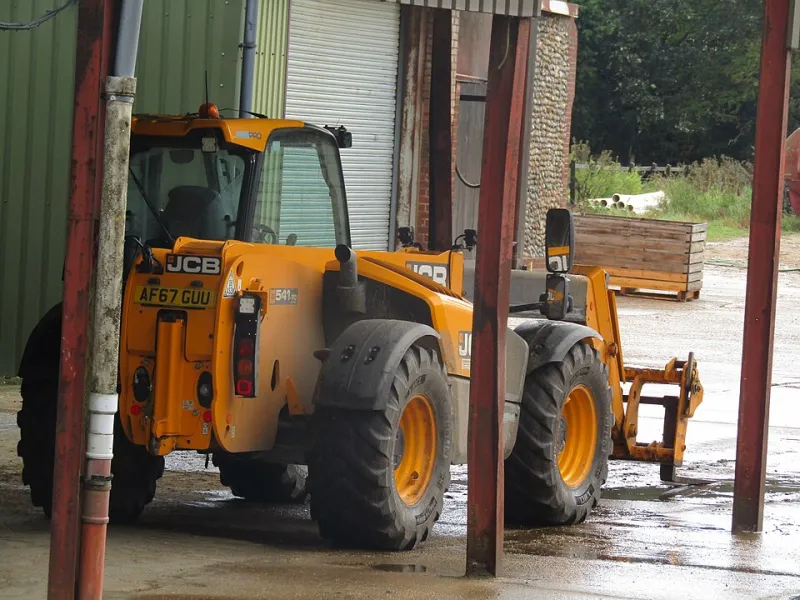
Photo: Kolforn (Kolforn) I'd appreciate if you could mail me ([email protected]) if you want to use this picture out of the Wikimedia project scope. This file is licensed under the Creative Commons Attribution-Share Alike 4.0 International license. Yo
On many mixed farms the grease schedule is not absent. It is stored in the head of the person who has done the job longest. That works until a weekend, a sickness absence or a new starter. Then the tractor with the loader gets a different number of strokes from the one without, the telehandler's headstock is missed, and the trailer that only works at harvest sits outside the routine entirely. The failure is rarely indifference. It is an undocumented route.
A fleet-wide lubrication map is not a manufacturer's service chart pinned to a shed wall. It is an operational document that states which machine, which points, which interval, which grease and who confirms the work. For a mixed UK fleet, the map has to cope with tractors, telehandlers, trailers and groundcare equipment that may be greased by different people at different times of year.
Start with a machine register, not a schedule
Begin with an inventory of every machine that has greasable components. List tractors, telehandlers, trailers, mowers, rollers and any groundcare kit by fleet number, make, model and year. Record the attachments that change the point count: front loaders, buckrakes, hedgecutters, trailers with hydraulic ramps. A tractor with a loader and mounted implement is not the same lubrication task as the same tractor on its own. The register prevents the common error of building a schedule around model names rather than the machines actually in the yard.
Count the points in working condition
Walk each machine with the handbook and a grease gun. Count every greasable point: loader pins and bushes, headstock, steering linkages, kingpins, PTO shafts, three-point linkage, trailer ramps and hitches, mower spindles and roller bearings. Note sealed-for-life components so they are not repeatedly inspected. Take photographs of each zone. Tag awkward points if the fleet is large. The objective is a point count that two people can independently verify, not a rough figure that varies with the operator.
The count should be recorded for the machine as configured. If a loader is removed for the winter, the route card should say so and show the reduced count. If a trailer is used with different bodies or ramps, record the variant. This is the detail that makes a lubrication ledger credible rather than decorative.
Group by interval, then by route
Manufacturers set intervals in hours or calendar terms. Translate those into the farm's working pattern. A daily check is not the same as a 50-hour grease, and a 250-hour interval may fall at an inconvenient point in harvest. Group points by interval first, then arrange them in a sequence that follows the machine: front, engine bay, rear, hitch, loader, implement. A route that jumps from one end of the machine to the other invites missed points.
On a mixed fleet, also group by yard location. Machines stored in the main shed can share a route card; groundcare kit kept in a separate store should not be bolted onto the tractor route without reason. The aim is a route that a relief operator can follow without rediscovering the machine each time.
Record the access hazard, not just the nipple
The point most likely to be missed is the one behind a guard, above a hot exhaust or under a raised loader. The map should state the safe condition for greasing: loader lowered, engine off, keys removed, wheels chocked, exhaust allowed to cool. If a point needs a platform rather than a ladder, say so. If a guard must be removed, move that point to a workshop task rather than a daily route. Access notes are not padding; they explain why a point is sometimes skipped and what must change.
One grease type is not a universal rule
Different points may call for different lubricants, and the handbook is the authority. Record the specification against each point or group of points. Label grease guns clearly and keep them clean. Cross-contamination and the wrong grease for a high-load pin are avoidable errors, but they are hard to spot once the work is done. A lubrication ledger that names the grease is more useful than one that simply says grease.
Sign-off must capture exceptions
Who signs off each route? The operator signs the routine card after greasing, recording the date, hour meter and any point missed. The technician signs workshop tasks. The farm manager reviews the cards weekly for missed points, recurring defects and interval drift. A tick alone is weak evidence; a note explaining that a nipple was inaccessible because the guard was damaged is useful. It turns a missed point into a repair item rather than a silent omission.
Make the map survive people and seasons
New starters should be inducted against the route card, not shown once by a colleague. Laminated cards or a tablet in the workshop both work; the test is whether the route can be followed without asking the person who normally does it. Review the map when an attachment is added, when a machine is replaced and at the start of harvest. Archive the card when a machine leaves the fleet. Version control matters because an out-of-date card is worse than no card at all.
The return is in consistency
A lubrication map will not make a worn pin last forever. It will show whether the pin was greased, by whom and when. That is the difference between a maintenance system and a habit. The cost is a few hours of survey work and a consistent sign-off routine. The benefit is fewer unexplained failures, better handovers and a defensible record when a machine is sold or a warranty claim is made. In 2026, with mixed fleets working harder and staff moving more often, the ledger is a modest control that earns its place.