Return Day, Not Reckoning Day: A Handback Checklist for Hired and Loaned Machines
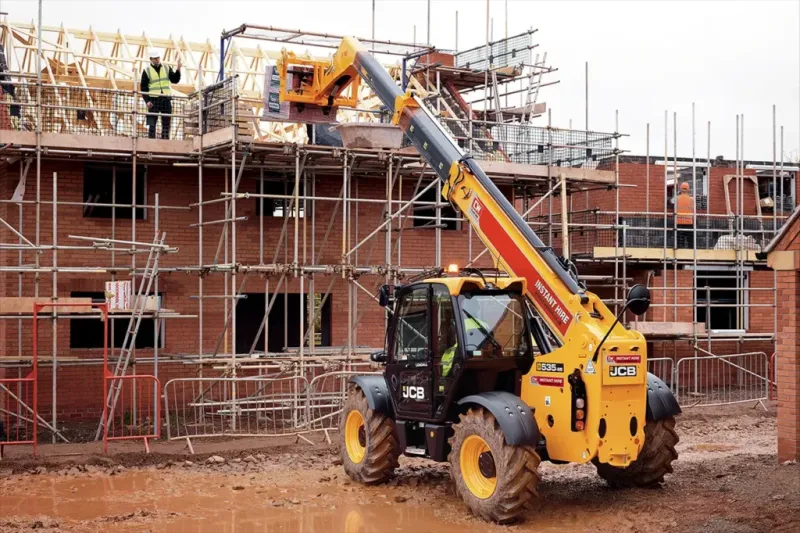
Photo: telehandler being inspected and washed before return to hire company UK farm, via www.cwplant.co.uk
Machinery moves between UK farms constantly. A neighbouring contractor lends a telehandler for a fortnight, a machinery ring supplies a drill for the autumn, a cousin's farm sends over a trailer for the beet campaign. The commercial terms are often agreed in a gateway conversation, and the evidence is often limited to a text message. That works perfectly until something breaks.
The remedy is not a lawyer. It is a routine that takes twenty minutes at each end of the hire and produces a record both parties are content to sign.
Agree the standard of return at collection
The single most useful question to settle before the machine leaves the owner's yard is what condition it is expected to come back in. Fair wear and tear is the usual phrase in hire conditions and it is almost never defined in a way that helps. Better to state it concretely: returned clean, fuelled to the level at collection, greased, with no new damage beyond normal working marks, and with all keys, guards, manuals and attachments present.
Where the hire is governed by written conditions, typically a plant hire trade association's model terms, read the off-hire, damage and cleaning clauses before signing. Those conditions commonly allow the owner to recharge cleaning and repair, and sometimes to charge a continuing hire rate until the machine is restored to a hireable state. That last clause is the one that turns a small disagreement into a large invoice.
Build the photographic record properly
A dozen photographs taken in daylight, with the machine's serial plate and hour meter in the set, will resolve more disputes than any amount of correspondence. The set should cover:
- The hour meter and fuel gauge, both legible.
- The serial or fleet number plate.
- All four tyres or both tracks, showing tread depth and sidewall condition.
- The bucket, grab or other attachment, inside and out.
- Glass, mirrors, lights and beacons.
- Steps, handrails and access panels.
- Any existing damage, photographed individually and described in the note.
- The underside or undercarriage where accessible.
Send the set to the owner by email or messaging app on the day of collection, so the timestamps sit outside either party's control. A shared folder is better still, because both sides then hold the same record.
Record hours and fuel as numbers, not impressions
Hour readings should be written down at collection and again at handback, by both parties where possible. Where the hire agreement includes an hours allowance, note the allowance and the rate for excess hours at the outset; the charge is standard in plant hire and is not a penalty invented on return day.
Fuel is the more common friction point. Return full is the simplest rule and the easiest to evidence with a photograph of the gauge beside a fuel receipt. Where red diesel is involved, both parties should be satisfied that the machine is being used for an activity that retains the rebated fuel entitlement; agricultural use generally does, but plant working on construction or landscaping work generally does not. Getting this wrong is a matter for HMRC rather than the hire agreement, and it is worth a sentence in the note.
Cleaning is a safety and biosecurity matter
A machine returned with soil packed into the undercarriage, straw wrapped around axles and slurry on the steps is not merely untidy. It is a biosecurity risk and a fire risk. Where the machine has been on more than one holding, a wash-down before it moves again should be part of the arrangement, and the standard should be agreed in advance rather than argued over.
Pressure washing a hot machine, or one with sensitive electronics and bearings, can do damage of its own. Note who is expected to clean it, where, and with what. If the owner prefers to clean it themselves, a pre-agreed cleaning charge is fairer than a dispute.
Separate damage from wear, deliberately
A handback sheet should have a section for defects and one for damage, and they should not be merged. Defects are mechanical failures that occurred during the hire; damage is physical harm to the machine or attachment. Recording a cracked loader arm and a worn cutting edge in the same list invites confusion about who pays.
Include a line for breakdowns and their cause. Most hire conditions distinguish between a breakdown arising from the machine's own condition, which is the owner's responsibility, and one caused by misuse, which is the hirer's. A written note taken on the day, with photographs, is what makes that distinction arguable later.
Confirm who insures what before the machine moves
Farm policies often cover machinery owned by the business, and may or may not extend to machinery borrowed or hired in. The owner's policy may exclude machines lent out for reward. Neither party should assume the other has it covered. A short written confirmation from each insurance broker, held with the hire note, closes this gap in minutes.
Where the hire is between farms as a favour, the informality is exactly what makes the insurance question urgent. A one-page note recording the machine, the period, the agreed use, the insurance position and the return standard is not a sign of distrust. It is a sign that both parties want the favour to be repeatable.
The handback sheet
On return, complete a single sheet and sign it in duplicate. It should record the date and time, the hour reading, the fuel level, confirmation of cleaning, a list of defects reported, a list of new damage with references to photographs, a list of attachments, keys and documents returned, and the name of the person accepting the machine on the owner's behalf.
Where something is genuinely disputed, record it as disputed rather than leaving the sheet blank. An honest gap is far easier to resolve than a document that quietly omits the problem.
A machine that goes back clean, fuelled and documented is a machine that will be lent again. On mixed farms, where the same three or four neighbours cover most of the harvest, that is worth more than winning the argument.