What the Warranty Still Covers: Mapping Protection Before the First Repair
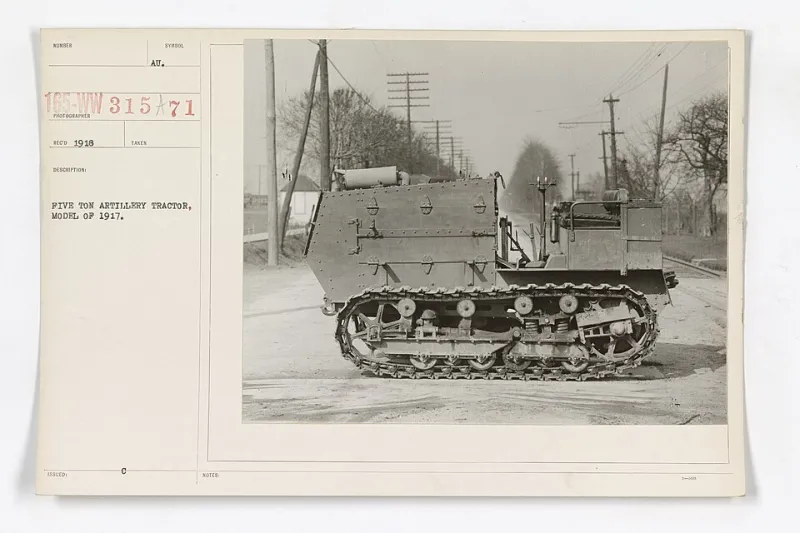
Photo: Unknown authorUnknown author or not provided, Public domain, via Wikimedia Commons
The first repair on a new machine is a test of documentation, not engineering. By the time a tractor, telehandler or mower has covered a few hundred hours, assumptions have formed about what the warranty will and will not pay for. Some of those assumptions will be right. The purpose of a warranty map is to establish which ones, calmly, while the machine is still working.
A warranty is a contract, not a promise of reliability
Farm machinery bought for business use sits outside consumer legislation. The relevant framework is the contract of sale, together with the implied terms in the Sale of Goods Act 1979, principally that goods are of satisfactory quality and fit for purpose. Those terms exist independently of any manufacturer warranty and are not extinguished by it. In England and Wales, the limitation period for a contractual claim runs for six years from breach; in Scotland the prescriptive period is five years.
The manufacturer warranty is a separate, additional promise, and it comes with conditions. Those conditions are usually where the argument lives.
Identify which documents are actually in play
On a typical purchase there are three or four documents, and they do not say the same things.
- The manufacturer warranty terms. Often issued at registration of the machine and rarely read at the time.
- The dealer's own undertakings. A dealer may offer a used machine with its own three-month or six-month warranty that is more generous in some respects and narrower in others than the manufacturer's.
- An extended warranty or insured warranty product. Usually sold separately, usually with its own claims process and its own exclusions.
- The invoice and order confirmation. This is where the specification, the delivery date and any express promises were recorded.
A useful exercise is to take all four and highlight, in different colours, the parts that deal with the same subject. Where the documents conflict, the more specific and more recently agreed term usually prevails, but the point should never be left to inference.
The wear parts line is broader than owners expect
Every warranty excludes wear and tear, and almost every owner believes they know what that means. In practice the exclusions list is longer than the headline: belts, filters, brake linings and discs, clutch friction material, tyres and tracks, cutting blades, tines, skids, shares, points, pickup tines, hoses subject to abrasion, cab trim, and in some cases any component that has reached a stated hour threshold.
Consequential items matter as much: the failed bearing may be covered while the shaft it damaged is not, or the reverse. Where a warranty offers a sliding scale of contribution by hours, that scale should be noted at the top of the map rather than discovered at the counter.
Service records are the condition most often broken
Manufacturer warranties typically require servicing at defined intervals, and those intervals are usually expressed in engine hours rather than calendar months. A machine that averages 600 hours a year will need attention far more often than a low-hour unit, and the calendar-based reminder on the office wall will not keep pace.
The conditions usually extend beyond timing. Approved lubricants, genuine or manufacturer-approved parts, records retained, and servicing carried out by an authorised dealer or to an approved schedule are common requirements. So are prohibitions on unauthorised repair, on modification, and on engine or transmission tuning through third-party software. A remap fitted for a few weeks of heavy haulage can void cover on the very components it stresses.
Practical defence is straightforward. Keep a service file per machine with the hour reading at each service, the parts used, the oil specification and the invoice. Photograph the hour meter at each service. If a claim is ever challenged, that file is the argument.
Consequential loss is nearly always excluded
The cost of the failed component is rarely the expensive part of a breakdown. The expensive part is the replacement hire, the delayed harvest, the lost contract work, or the milk that could not be collected. Manufacturer warranties almost universally exclude these losses, and a dealer's goodwill is not a substitute for cover.
This is the point at which the map should connect to the insurance file. Where consequential loss matters to the business, it belongs in a machinery breakdown or business interruption policy, not in a warranty negotiation. Some insured warranty products extend to hire of a replacement machine; that extension is worth pricing explicitly against the real cost of a week without the machine.
Transferability on used equipment
Cover does not always follow the machine. Some manufacturer warranties transfer to a second owner provided the change is notified and the service history is intact; others lapse on change of ownership or on export. Where a used machine is bought with remaining manufacturer warranty, obtain written confirmation of the transfer from the manufacturer, not only from the seller.
Dealer warranties on used machines are usually shorter and more conditional, often capped at a claim value and tied to servicing by that dealer. Read the cap, the claim limit and the labour rate recovery, because these determine what a repair actually costs the buyer when a claim is accepted.
Who to call first
Small procedural failures void more claims than mechanical ones. The common conditions are: notify the dealer before work begins, do not authorise repair yourself, allow inspection, and retain the failed parts. An independent repair carried out quickly on a Friday afternoon can turn a covered failure into an unfunded one by Monday.
Record the sequence in the map: who is called, in what order, and within what time. Attach the out-of-hours number. When a machine fails at 9pm on a Saturday in September, nobody reads terms and conditions.
The one-page map
A single sheet per machine, printed and kept with the logbook, should record: warranty type and expiry, whether expiry is by date or hours; the servicing schedule and who may perform it; the wear parts exclusion list in plain terms; any hour-based contribution scale; what is excluded as consequential loss; whether cover transfers; the claims notification procedure and contacts; and the date the map was last checked against the current terms.
Review it at every service. Ten minutes with a highlighter at the kitchen table in February is a great deal cheaper than a disputed invoice in September.