After the Cover Ends: A Planned Handover from Dealer Service to Independent Support

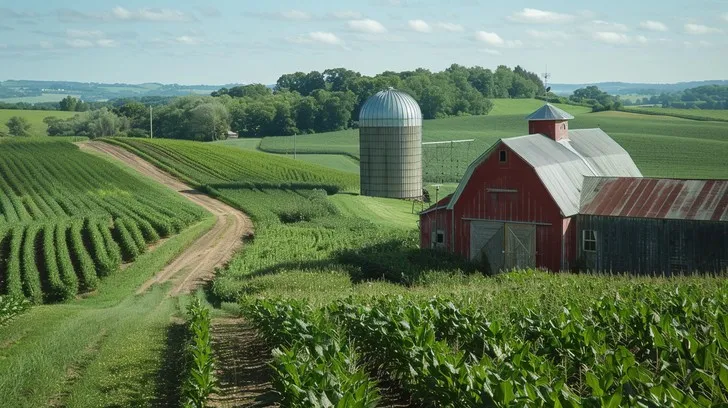
Photo by Photo by BEN ELLIOTT on Unsplash on Unsplash
The end of a manufacturer warranty or dealer service contract rarely announces itself with any drama. A renewal date passes, a service plan lapses and the machine carries on working. The risk is not that the tractor or telehandler suddenly becomes unreliable; it is that the farm drifts from a supported asset into an unsupported one without testing the alternatives, negotiating the terms or preserving the route back to the dealer when a serious fault appears.
For machines entering their fourth or fifth season in 2026, the question is worth treating as a maintenance decision in its own right. Dealer cover is not simply a labour rate. It is a bundle of access, software, parts priority and, in some cases, discretionary goodwill. Leaving it behind can be sensible, but only when the exit is planned.
Map the expiry before it maps you
Start with a simple register. For each tractor, telehandler, utility vehicle and piece of groundcare equipment, record the warranty end date, any extended warranty, the dealer service plan terms, telematics or diagnostic subscriptions, and the service intervals that remain. Include machines bought used where the remaining cover may be transferable or may expire earlier than assumed.
This register should also note which tasks are dealer-only in practice. Routine engine oil and filter changes are rarely the issue. The complications tend to sit around transmission calibrations, ECU updates, after-treatment diagnostics, hydraulic system settings and safety-related software. If the machine has a long dealer service history, ask for a copy of the records. Those records matter later if a claim for out-of-warranty support is made.
The aim is not to compile paperwork for its own sake. It is to establish what is being paid for, what will disappear and what can be replaced by an independent mechanic without exposing the farm to unnecessary downtime.
What dealer cover actually buys
A dealer service plan is usually priced as a fixed or scheduled cost, but its value lies in more than the hourly rate. It typically brings trained technicians, genuine parts, manufacturer diagnostic equipment, campaign notices and a known process for escalating faults. In busy periods, a dealer may also give priority to machines with a service relationship, although that is a commercial judgment rather than a guarantee.
The less visible element is goodwill. Manufacturers and dealers sometimes contribute towards repairs just outside warranty where the machine has been serviced within the network and the failure is unusual. That support is discretionary. It is not a contractual right, and it becomes harder to argue when the service history is patchy or the work has moved elsewhere.
Software support is the other practical loss. Independent mechanics can carry strong diagnostic tools, but manufacturer-level access is not universal. A specialist may be able to read fault codes and replace components, yet still need a dealer to complete a calibration or software update. That does not make independent support a poor choice. It means the exit plan must identify which faults will still require dealer involvement.
Comparing cost per hour and downtime honestly
Dealer labour rates vary widely by brand and region, and independent rates vary just as much. A simple comparison of hourly figures is therefore misleading. Build an all-in cost for each option: labour, travel, call-out, parts markup, diagnostic time, collection and delivery, and the cost of the machine standing still.
As a working rule, a dealer may charge more per hour but can be quicker on complex electronic faults because it has the software, training and parts logistics. An independent mechanic may charge less and attend sooner for straightforward mechanical work, but may lose time waiting for a specialist part or referring a software issue back to the dealer. The cheaper invoice is not necessarily the cheaper outcome if it adds two days of downtime in a peak week.
Farm accounts rarely capture downtime well. A telehandler out of action during a livestock bedding cycle, or a groundcare mower stopped during a contracted maintenance round, can cost more in disruption than the difference between labour rates. The comparison should therefore be made per task and per season, not as a single headline rate.
A staged exit, timed around the work
A sensible handover begins well before expiry. Twelve months out, confirm exactly what cover remains and what the dealer would charge to continue it. Nine months out, trial an independent mechanic on a low-risk routine service, ideally on a machine that is not critical to daily operations. Compare the invoice, the time taken, the quality of record-keeping and the availability of parts.
Six months out, establish the support arrangements that will replace the dealer plan: a named independent contact, a parts account, a diagnostic option and a clear understanding of which faults will still go to the dealer. Three months out, confirm a paid route back to the dealer for urgent breakdowns. This may be a pay-as-you-go arrangement, a retained annual inspection or a priority breakdown agreement. The wording matters less than the confirmed contact and the understanding that the farm remains a known customer.
Timing should avoid peak weeks. For an arable operation, that means avoiding harvest, autumn drilling and the main spring workload. For a livestock farm, it means avoiding lambing, calving and the winter housing period. For a groundcare contractor, it means avoiding the growing season. A quiet window gives room to test the new arrangement without betting the farm's daily work on an untried process.
Keep a route back for the bad day
Leaving a service plan should not mean severing the relationship. Dealers retain value for software, complex diagnostics, safety-related repairs and genuine parts. A farm that has moved routine maintenance to an independent mechanic can still ask the dealer to quote for a major fault, supply parts or carry out an annual inspection.
Keep service records in a consistent format, retain the machine identification details and document any independent work. If a goodwill claim is ever needed, a complete history is more persuasive than an informal one. It is also worth asking the dealer whether a paid inspection or a small annual service will keep the machine on its priority list. The answer will vary, but the question costs nothing.
The exit from dealer cover is best treated as a handover, not a cliff edge. The farm should know what it is giving up, what it is gaining and who will attend when the machine stops at the worst possible moment. Planned in a quiet month, that transition can reduce cost without reducing backup. Left to drift, it tends to do the opposite.