Peak Weeks, Not Peak Power: Sizing Groundcare Machinery to the Working Year
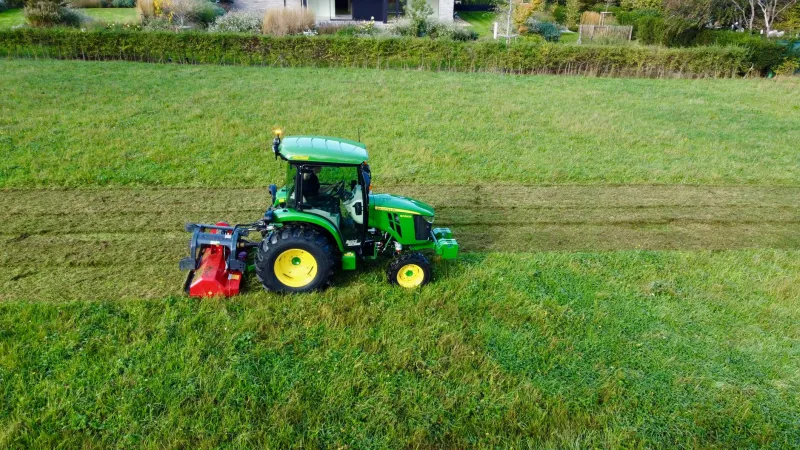
Groundcare machinery is often bought against the worst week of the year. A contractor remembers a summer when two mowers were needed at once; an estate recalls a wet autumn when a utility vehicle was pressed into service; a mixed farm thinks of the one field that needs a compact tractor with more lift. Those memories matter, but they are not a specification. The more reliable test is the annual duty cycle: the hours a machine will actually run, the work it will do in those hours, and the cost of each productive hour across its working life. In 2026, with new machine prices and finance costs still demanding careful justification, that test is more useful than ever.
Begin with the working calendar
A duty cycle is not a single number. It is a pattern of work across the year. For a mower, that pattern may be a long growing season with weekly cuts, a mid-season topping pass and a late-season tidy-up. For a utility vehicle, it may be daily livestock checks, intermittent haulage and a winter feeding routine. For a compact tractor, it may be loader work, yard scraping, paddock topping and occasional transport.
Start by mapping those tasks onto a calendar. Mark the busy weeks and the quiet ones. The hour meter records engine hours, not productive hours, and the two are rarely the same. A machine that spends twenty minutes warming up, travelling between fields and manoeuvring through gates may record an hour on the meter while delivering far less working time. For sizing purposes, separate productive work from transport, set-up and idle time. That distinction prevents a machine from appearing more capable than it is.
The three numbers behind a duty cycle
Every groundcare sizing decision rests on three quantities. The first is the annual workload: hectares to mow, loads to move, paddocks to maintain or kilometres of verge to cut. The second is a realistic work rate: the area or volume a machine can handle in an hour under UK conditions, including slopes, wet ground, narrow gates and road travel. The third is the available peak window: the days or weeks in which the work must be completed.
A simple formula helps: annual machine hours are the sum of task hours, transport and set-up hours, and a modest allowance for idle and warm-up. Task hours are calculated by multiplying the area or units by the number of passes, then dividing by the effective work rate. The same calculation should be repeated for the busiest fortnight, because peak capacity is what often drives the purchase of a larger machine. If the peak is short and can be covered by a contractor, the case for extra capital weakens.
A practical worksheet
| Worksheet line | How to estimate | Example |
|---|---|---|
| Task area or units | Hectares, paddocks, loads or verge kilometres | 40 ha of paddock mowing |
| Passes per year | Count cuts, topping runs or haulage cycles | 12 passes |
| Effective work rate | Use a realistic field rate, not a brochure figure | 1.6 ha/h |
| Task hours | Area x passes / work rate | 300 h |
| Transport and set-up | Road travel, loading, gates and implements | 40 h |
| Idle and warm-up | A reasonable allowance, not a hidden cost | 20 h |
| Annual machine hours | Sum of task, transport and idle hours | 360 h |
| Peak-week hours | Repeat the calculation for the busiest fortnight | 55 h |
The second half of the worksheet converts those hours into cost per working hour. Depreciation is purchase price less residual value, divided by expected life hours. Finance, insurance and storage are annual costs divided by annual hours. Fuel is litres per hour multiplied by price. Repairs and maintenance should be based on experience or a realistic percentage of purchase price, not on the hope that nothing will fail.
Worked examples from the working year
On a 120-hectare mixed farm, a compact tractor may run 380 to 450 hours a year, with 250 of those hours on loader work. Moving from a 35 hp to a 50 hp model may cost £10,000 or more and require wider implements. If it saves only 40 hours a year, the extra capital must be justified by better lift capacity, improved stability or reduced labour, not by the hours saved alone. If the peak week is already comfortable, the larger machine may simply raise the cost per working hour.
On an estate with 400 hectares of grounds, a wide-area mower running 600 hours a year can make a strong case for specialisation. A third mower used for 80 hours a year on verges and rough corners usually cannot. The estate should compare the cost per hour of ownership with the cost of a contractor or a hire machine, including the value of staff time and the risk of missing a weather window. A specialised machine that sits idle for ten months is rarely the cheapest answer.
A rural business running a utility vehicle for paddock maintenance may cover 900 hours a year, with daily livestock checks, fencing materials and feed delivery. At that level, payload, towing capacity and operator comfort become genuine productivity factors. The same vehicle on a smallholding doing 150 hours a year is more likely to be a convenience purchase. Convenience has value, but it should be recorded as such rather than disguised as a duty-cycle requirement.
When a larger machine stops paying
A larger or more specialised machine stops paying when the extra annual cost exceeds the value of the hours, labour or timeliness it releases. Divide the additional annual ownership cost by the additional hours saved. If a machine costs £1,500 more a year to own and saves 50 hours, the extra cost is £30 per hour saved before fuel and repairs. That may still be worthwhile if it avoids a £40 per hour contractor during a narrow silage window, but it is difficult to justify if it merely reduces idle time in a quiet month.
The calculation should also include the cost of flexibility. A larger machine may not fit through narrow gates, may compact wet ground or may require a larger trailer and storage space. In UK conditions, those practical limits often decide the question before horsepower does. The right size is the smallest machine that can complete the peak work at a realistic rate, with enough reserve for weather delays and breakdowns.
A short decision rule for 2026
Estimate annual hours by task, not by instinct. Identify the peak weeks and the hours they demand. Calculate cost per working hour using capital, finance, fuel, repairs and storage. Compare a larger or specialised machine with the alternatives: a smaller model, a contractor, a hire machine or a shared arrangement. Then choose the machine that meets the working year with the least whole-life cost, accepting that some reserve capacity is prudent and some is merely expensive.
The hour meter may not lie, but it does not tell the whole story. The working calendar, the realistic work rate and the cost per productive hour are better guides to groundcare machinery sizing in 2026.