Yard Clearance with a Purpose: Valuing the Machines You No Longer Use
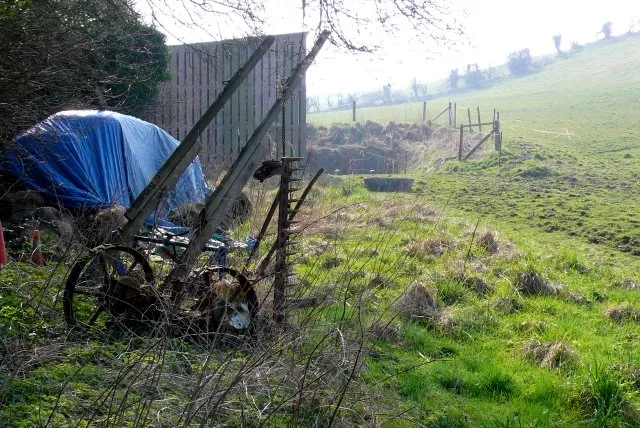
Photo: Nigel Mykura, CC BY-SA 2.0, via Wikimedia Commons
Every farm has a corner where machines go to be forgotten. A tractor with a failed transmission, a set of implements for a crop no longer grown, a trailer with no lights and a sprayer that has not moved since the last change of system. These items feel harmless because they are not on the accounts as a cost. In practice, they occupy shed space, complicate valuations and absorb time that could be spent on productive assets.
A yard clearance is not simply a sale. It is an exercise in asset recovery and risk reduction. The objective is to move each item to its highest and best use: complete sale, part-exchange, parts stripping, scrap or lawful disposal. The order matters, because the wrong route can turn a recoverable asset into a liability.
First, inventory the yard
Begin with a written inventory. Record the make, model, serial number, condition, attachments, keys and any documents. Photograph each item from four angles and note whether it runs, rolls or is seized. Group the inventory into five categories: keep and use, repair and sell, sell as is, strip for parts, and scrap or dispose.
The inventory should include the small items as well as the machines. A pallet of obsolete filters, a shelf of unidentified hydraulic fittings and a row of worn tyres all take space. They also make a yard look disordered to a buyer or valuer, which has a commercial cost even when it does not appear on an invoice.
The storage-cost calculation
Storage is not free. A farm shed has a replacement cost, an insurance cost and an opportunity cost. A useful way to test whether an item deserves its space is to apply a notional rent per square metre per year. Depending on shed quality and region, a figure of £25 to £60 per square metre per year is a reasonable planning assumption for covered space.
An implement occupying 30 square metres at £40 per square metre per year costs £1,200 a year in notional rent. Over five years that is £6,000 of space consumed by an asset that may be worth £1,500. The calculation does not need to be exact to be useful. It exposes the items that are being stored because they are heavy, awkward or emotionally familiar rather than because they have a future role.
Add the practical costs: obstruction of movement, fire risk, vermin habitat, oil leaks and the difficulty of finding the parts that are actually needed. A cluttered yard slows every maintenance job and makes accidental damage more likely.
Salvage, sell, part-exchange or scrap
The decision route should follow value and risk. A complete machine that runs and has a clear market should normally be sold or part-exchanged before it is stripped. A dealer part-exchange may not offer the highest headline price, but it can reduce the net cost of the replacement and transfer the disposal burden in one transaction.
Parts stripping is most attractive for common models with a strong repair market and for orphan implements where a small number of components are difficult to obtain. A clean cab, a rebuilt injection pump, a set of wheels and tyres or a hydraulic valve block can be worth more than the machine as a whole. But stripping has its own costs: labour, storage, listing, packaging and the risk of remaining with a skeleton that nobody wants.
Scrap is the correct route for hulks with no realistic repair market. It is also the route for items that cannot be sold safely or lawfully. Scrap should not be the default, because complete machines and attachments often attract a better return at auction than their weight value.
Auction versus scrap
Auction returns depend on the venue, the lot, the buyer pool and the fees. Seller commissions and entry fees commonly fall in the range of 10 to 15 per cent, with transport, VAT and reserve fees extra. A complete tractor or a usable implement can still outperform scrap, particularly if it is offered with a clear description and honest condition report.
Scrap returns are driven by weight and grade. In 2026, mixed ferrous scrap is commonly in the region of £200 to £300 per tonne, although merchants vary and collection charges apply. A lightweight trailer may be worth little more than the cost of moving it. A heavy tractor may be worth more as scrap than as a non-runner, but only if the legal and practical disposal route is sound.
The sensible approach is to obtain at least two quotes: one from an auctioneer or machinery trader, and one from a licensed scrap merchant. Compare net proceeds after fees, transport and VAT, not headline prices.
Legal disposal of oils and batteries
Old machines contain materials that cannot be treated as ordinary waste. Engine oil, hydraulic oil, diesel, coolant, lead-acid batteries and contaminated filters are subject to waste controls. Burning or burying them is not a lawful disposal route and creates a pollution risk that can affect land values and insurance.
Use a registered waste carrier and a licensed waste site. Hazardous waste movements require the appropriate consignment note. Batteries should be segregated and sent for recycling through an authorised route. Tyres should go to a licensed tyre recycler rather than being stored indefinitely or used as weights without consideration of the rules. The waste hierarchy still applies: prevent, reuse, recycle, recover and only then dispose.
Before any clearance, check the Environment Agency guidance for the current requirements and keep the paperwork. A clean audit trail is part of the value of a properly cleared yard.
A clean yard is a trading asset
A tidy yard changes the terms of trade. Dealers and private buyers read a farmyard as evidence of management. Machines that are accessible, labelled and accompanied by records are easier to inspect and easier to value. A buyer who can see the asset clearly is more likely to make a serious offer and less likely to discount for perceived neglect.
Clearance also improves the farm's own buying decisions. When the yard is full, a new machine is often bought without a clear plan for the old one. When space is managed, the trade-in or sale can be arranged before delivery, reducing the risk of a depreciating asset being parked in the open.
A thirty-day clearance plan
Week one: inventory, photograph and tag every item. Week two: obtain auction, dealer and scrap quotes. Week three: arrange lawful disposal for oils, batteries and tyres. Week four: move the retained items to labelled bays and complete the sales. Record the net proceeds and the space released.
The aim is not an empty yard for its own sake. It is a yard in which every machine has a role, a value and a route out when that role ends. That is a rural business decision as much as a housekeeping one.